
A candidate a few weeks from CCNA 200-301 needs ccna practice questions that explain every answer, plus labs that build command-line habits. Use a blueprint-based quiz, original worked questions and simulator labs, and skip answer dumps.
This page supplies worked questions and lab exercises tied to exam domains. For the wider study plan, read how to prepare for ccna.
Choosing practice material that teaches
Good practice material is written to the exam blueprint, explains each answer and makes you recall a command or concept rather than a memorised option letter. KW Train, for example, offers a free CCNA 200-301 practice exam of 100 questions, written to Cisco’s exam blueprint, with detailed explanations for each question. The provider states that the exam contains no brain dump questions.
Those three features are the selection criteria to apply to any source: blueprint alignment, explanations and no leaked-content reliance. A free 100-question set suits a first diagnostic. It does not replace hands-on work, because a quiz cannot show whether you can configure a VLAN or read a routing table under time pressure.
Comparing the practice options
| Option | What it gives | Limit | Planning use |
|---|---|---|---|
| Free blueprint-based practice exam | 100 questions at no cost, with detailed explanations | Multiple-choice only; no device to configure | Use early as a diagnostic, then again after revision |
| Original worked questions (below) | Each question tied to a domain, with reasoning for the keyed answer | A small set, not a full exam | Use to check how you reason, not just what you recall |
| Simulator labs | Hands-on configuration and verification in GNS3 or Packet Tracer | Takes setup time; no automatic marking in GNS3 | Schedule regular sessions on weak domains |
| Vendor dump-and-course bundles | Courses sold alongside exam dumps | Dumps give answers without teaching the reasoning | Prefer sources that explain answers |
The practice-exam details come from KW Train’s CCNA practice exam page, and the dump-and-course bundle from SPOTO’s demo-questions page; the other two rows are judgements on how to use the formats.
Topics practice questions should cover
Practice questions should follow the exam blueprint, so every domain gets attention rather than only your favourite one. Weight your time towards the domains where your error log shows repeated misses.
- Network fundamentals: models, device roles, cabling, addressing and subnetting.
- Network access: VLANs, trunks, switching behaviour and wireless basics.
- IP connectivity: routing tables, static routes and dynamic routing.
- IP services: address assignment, time, name and translation services.
- Security fundamentals: access control, port protection and device hardening.
- Automation and programmability: controller concepts and how configuration is managed at scale.
Worked sample questions by exam domain
The questions below are original. They use the multiple-choice shape seen in published samples: four options and one keyed answer. Cover the explanation, choose an answer, then compare your reasoning with the worked answer.
Network fundamentals: which layer routes between networks?
Question. Which OSI layer is responsible for logical addressing and for forwarding packets between different networks?
- A. Data link
- B. Network
- C. Transport
- D. Session
Worked answer: B. The network layer carries logical addresses and makes the forwarding decision between networks, which is what routers do. The data link layer handles local delivery using hardware addresses, the transport layer manages end-to-end conversations, and the session layer manages dialogues between applications. If you hesitated, revisit the 7 layers of the osi model and match each layer to the device or protocol that works there.
Network fundamentals: data plane versus control plane
Question. Which function occurs on the data plane of a router?
- A. Exchanging routing updates with neighbouring routers
- B. Forwarding traffic through the device towards its destination
- C. Electing a spanning tree root
- D. Authenticating administrators who log in
Worked answer: B. The data plane moves user traffic through the device. Exchanging routing updates and electing a root bridge are control plane activities that build the information the data plane uses. Authenticating administrators belongs to the management plane. Published sample sets ask this same concept, such as the one on SPOTO’s demo page, so be ready to separate forwarding from decision-making.
Network access: reading VLAN membership
Question. Which command lists each VLAN on a switch together with the access ports assigned to it?
- A. show ip interface brief
- B. show running-config
- C. show vlan brief
- D. show cdp neighbors
Worked answer: C. The show vlan brief command summarises VLAN names, status and member ports. The show ip interface brief command summarises interface status and addressing, which is useful but does not group ports by VLAN. Running configuration would contain the information, but it is slow to read. Neighbour discovery output shows adjacent devices only.
IP connectivity: which route wins?
Question. A router holds a broad route and a more specific route that both match a packet’s destination. Which route does it use?
- A. The route with the shortest prefix
- B. The route with the longest matching prefix
- C. The route with the lowest metric regardless of prefix length
- D. The route learned most recently
Worked answer: B. Routers select the most specific matching entry first. Metric and administrative preference only decide between routes to the same prefix. Candidates who choose C are usually mixing up how a route is chosen with how competing sources of the same prefix are ranked. Add that distinction to your notes.
Security fundamentals: protecting an access port
Question. Which switch feature limits which devices may send traffic on an access port by restricting the hardware addresses allowed?
- A. Port security
- B. Spanning tree portfast
- C. Link aggregation
- D. Trunk encapsulation
Worked answer: A. Port security restricts the addresses permitted on a port and defines what happens on a violation. Portfast speeds up forwarding on edge ports, aggregation bundles links, and encapsulation tags frames on trunks. None of those restrict who connects.
What CCNA simulation questions look like
Simulation questions present a virtual device or small topology and ask you to inspect or change it, rather than pick a lettered option. Typical tasks are to read command output and identify a fault, or to enter configuration so a stated requirement is met. Multiple-choice items test recognition; simulations test whether you can produce the right command and interpret the result.

A realistic way to rehearse is to work through a Packet Tracer activity or a lab you built yourself, with a short checklist of required outcomes and no peeking at your notes. Marking yourself against that checklist mirrors the exam habit of verifying work with show commands before moving on.

Lab exercises in GNS3 and Packet Tracer
Labs turn the questions above into skills. Build them in GNS3 or Packet Tracer, whichever you can run reliably, and keep each lab small enough to finish in one sitting. Readers who want context on virtualised environments, which many lab setups resemble, can start with cloud networking basics.
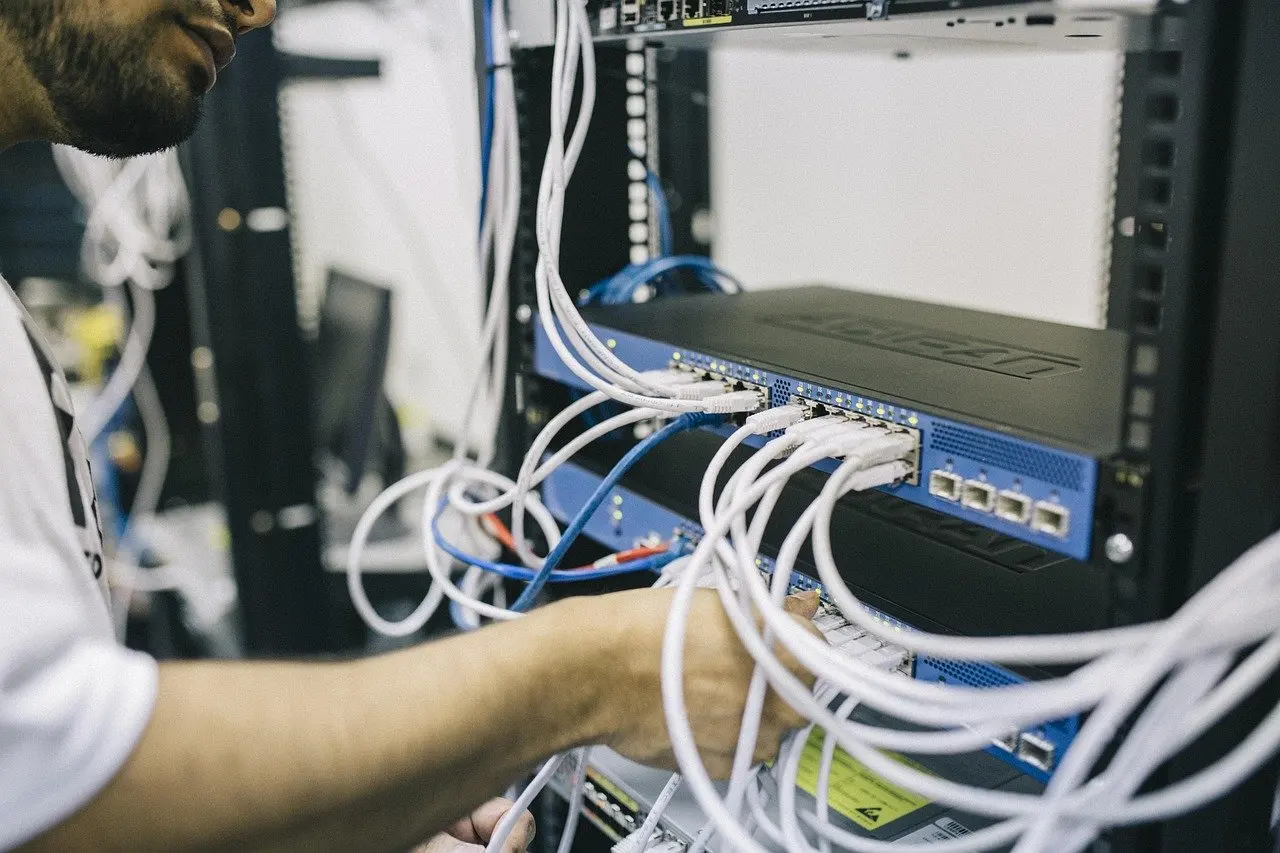
- Network access lab: create several VLANs on a switch, assign access ports, then prove separation with show vlan brief. This reinforces the VLAN question.
- IP connectivity lab: link routers with static routes, add a more specific route beside a broad one, and watch which path traffic takes. This reinforces longest-prefix matching.
- Security lab: enable port security on an access port, connect an unexpected device and observe the violation behaviour.
- Fundamentals lab: trace a ping across the topology and name the OSI layer at which each failure would appear.
After each lab, run show ip interface brief and compare the interface states with what you intended. That one habit catches a large share of shutdown ports and addressing slips.
Subnetting practice by hand
Calculation questions reward repetition on paper, not on a calculator. Work each problem in the same order: identify the prefix length, find the block size, list the network boundaries, then state the usable host range. Keep the written method visible so a slip is traceable to a single step.

Mix problem types rather than repeating one. Ask for network address, broadcast address and host range in different orders so you cannot rely on a memorised pattern.
Reviewing wrong answers
Review matters more than the score, because each miss shows which concept or habit failed. Explanations are the main value of a practice set, which is why the detailed explanations on KW Train’s practice exam matter more than the question count.
- Write the question topic and its exam domain in an error log.
- State in one sentence why your chosen option was wrong, not just why the keyed one is right.
- Classify the miss as a knowledge gap, a misread question or a command-syntax slip.
- Rebuild the concept in a lab so you see the behaviour, not only the explanation.
- Retest the same topic a few days later with a fresh question.
Patterns matter. Several misses under one domain mean revisit the material; scattered misses across domains usually point to rushing.
Decision checklist before you commit study time
- Take a blueprint-based quiz with explanations to find weak domains.
- Work through the worked questions on this page, covering each answer first.
- Build a small lab for every weak domain and verify it with show commands.
- Do subnetting by hand until the method is automatic.
- Retest, and drop any source that gives answers without reasoning.
Frequently asked questions
Who is CCNA 200-301 aimed at?
One published description calls the course meant for new network administrators and classes it as associate-level Cisco training. Another describes it as designed for new IT professionals with at least a year of network administration experience, so beginners should expect to build practical skills alongside the quizzes.
Are exam dumps a good way to practise?
No. Dump-style material supplies answers without the reasoning, so it trains recall of options rather than the ability to configure and troubleshoot. Some vendors sell dumps next to courses, so check whether a source explains its answers before relying on it.
Is one free practice exam enough?
It works as a diagnostic, not as full preparation. A free set of 100 questions shows where you are weak; labs and a retest on those topics are what close the gaps.
Should I practise in GNS3 or Packet Tracer?
Choose the one you can run consistently. Either lets you build a topology, apply configuration and verify it with show commands, which is what simulation-style questions expect.